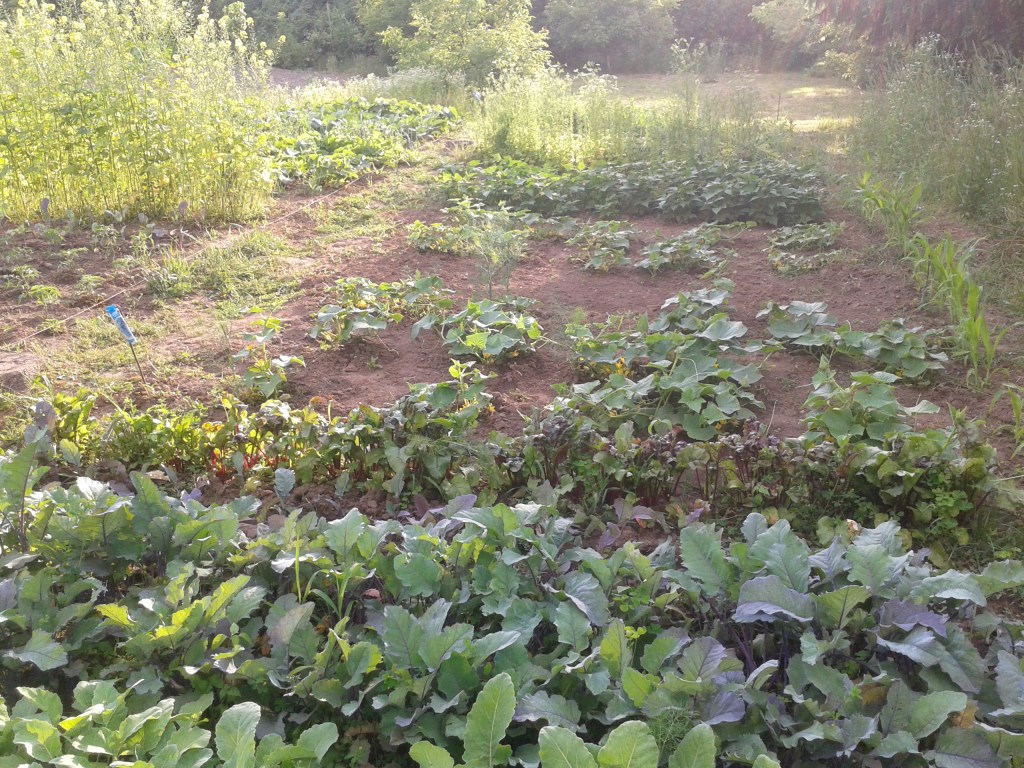
Are we there, yet? 🙂
I live in Europe (zone7) and my garden is in a mostly flat location with some smaller forested area. The latest years brought some really warm late winter days and hot spring weeks.
Nowadays one of the most common questions in gardening groups is: When can I start sowing? Which day is best for peas or squash?
Mid-March is usually the time when we can finally start working in the garden but there are some basic rules to obey:
- If your soil is soaked and muddy, do not step on it, even if you feel “you should’ve planted already last week.”
No, you don’t need boards or snowshoes either!
You’ll do more harm by compacting wet soil than delaying the sowing. Plants can catch up if sown in the right conditions. - Seeds are picky, sometimes even choosy. Each one has its own preferences.
The two most important factors? Soil temperature and moisture.
You can’t skip either one. While warmth influences germination speed, without moisture the tiny root tip will just dry out.
Rule of thumb: Never sow into frozen ground!
- Always label your seeds when sowing! It’s the only way to remember which variety did best that year and which worth to save seeds to have your own seedbank.
I’ll write more about seed saving later, but start planning now.
Fun fact: peas, beans, and tomatoes don’t need protection from cross-pollination — just keep the variety names separate and write down your experience with the variety. - Soil bed prep is a big topic.
I’ve sown into “perfect” tilled beds and also into rows scratched into no-dig mulch soil with a hoe. The real difference is in soil life — and tilled soil has much less of it. Tilling isn’t the end of the world, but it’s easy to mess soil life up. Don’t try to go no-dig overnight — prepare a section this summer, and transition gradually next year. Read the basics about no-dig gardening and the first steps towards a sustainable life in this post. - Here’s a trick:
If the soil is dry and it hasn’t rained, pour one 10-liter watering can every 10 meters of furrow after sowing. That moisture is just enough to trigger germination. - Last basic tip:
Never leave the soil bare after sowing! Cover it with anything — straw, hay, grass clippings.
If there are no seeds in it, it’s perfect mulch.
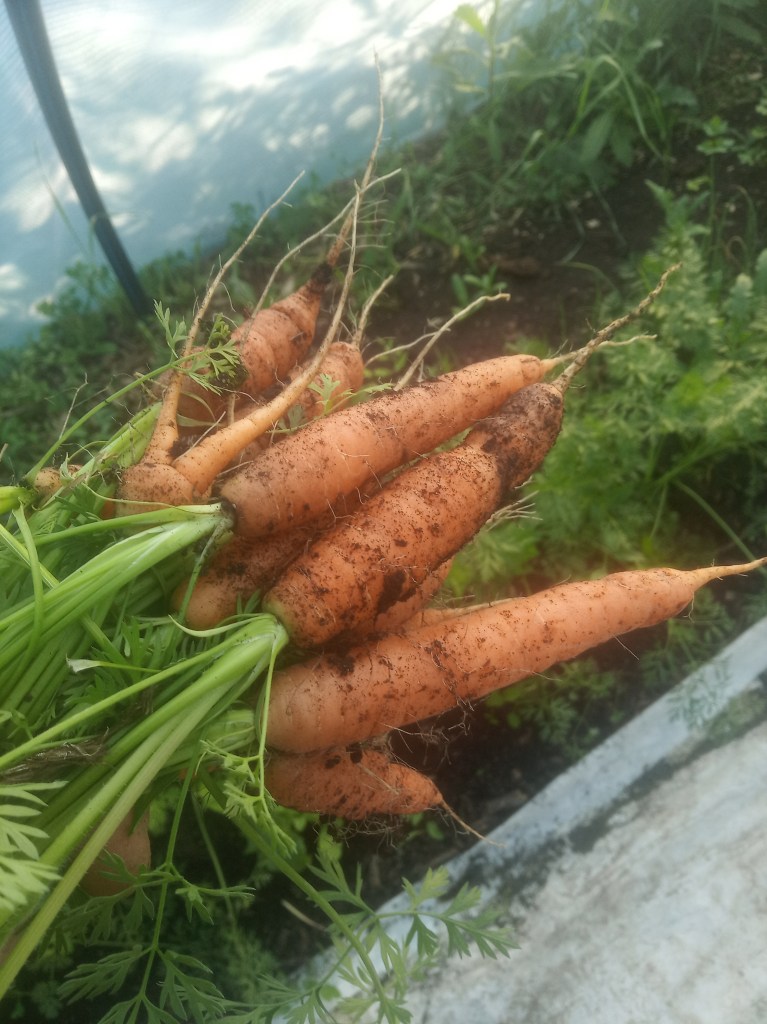
Order is not an ecological concept — chaos is the foundation of ecology.
This statement appears in several lectures by Iván Gyulai, and as strange as it may sound at first, the explanation is quite clear. We tend to believe that small gardens should look sterile, like something out of a catalog. Straight lines, always-raked or paved pathways, and weed-free garden beds are considered beautiful — while the plants themselves suffer from sunburn, dry microclimates, and a lack of water. These ‘like-hunting’ gardens absorb enormous amounts of irrigation, because the stripped, bare soil heats up drastically under the blazing summer sun.
Nature ensures that every element of an ecosystem can thrive under the right conditions.
It’s important to remember that a plant can only remain and develop healthy and resilient if it’s growing in an environment suited to its needs. Species that are foreign to a landscape often struggle to adapt — or worse, they become invasive and push out native vegetation.
Why does this matter to us—those of us planning our kitchen gardens?
Well, no one wants to suffer in the garden just to eat a handful of green beans, tomatoes, or carrots. We want to enjoy the process, to relax and admire the beauty while working. The fact that we can also save money and put healthy greens on the family table motivates many to grow their own food. Do not feel selfish if you do gardening just for the pure fan of being outside or on the other hand gardening for eating free vitamins and calories. The most important thing to find your own way and feel satisfied at the harvest.

Every bit of help counts—especially if it means less physical effort later. And that starts with not overworking the garden.
Let’s interfere as little as possible. Let a few weeds grow, protect the flowering “wild herbs,” and don’t obsess over clearing every single fallen leaf or twig.
And that brings us to bed planning
You might think that’s the main point—but in reality, it’s much more important to consider what kind of environment your plants will grow in. Okay, not important for everyone but I am thinking this way 🙂 Most of us have already picked a spot for this year’s garden, depending on our individual space and circumstances. Thankfully, the weather is on our side, and we can begin preparing the soil.
This year, I am using mixed techniques in my garden. I’ll have:
- no-dig areas,
- traditional dug beds,
- raised beds,
- raised beds with a layer of manure at the bottom,
- and even a hügelkultur-inspired bed

Do you already have your seeds ready? Let me know what you’re sowing this spring!
Get our hands dirty!
If the soil isn’t frozen by mid-February, you can already sow the following crops directly into the beds:
- spring garlic,
- peas,
- radishes,
- parsley,
- carrots,
- head lettuces,
- and all kinds of onions — red, yellow, white, or shallots, whichever you prefer.

In zone 7, in my garden you are still on time, do not need to hurry up. Most of these can go directly into the soil, but lettuces are worth starting indoors, especially if you’ve got a sunny south-facing window. That way you’ll get better germination and make more efficient use of your seeds.
You can also sow celery seeds now if you plan to transplant later. They germinate slowly and need plenty of time to grow. Soon, you’ll be able to start peppers and eggplants as well — but in mid-February, it’s best to only sow chili varieties. The others can wait until late February or even early March.
You’ll find all the relevant details — like germination times and temperature preferences — in the Planting Calendar compiled by the Hungarian Ecological Institue. It’s a great tool for planning your sowing schedule! It is in Hungarian and for zone7 but you still can find it useful. I am working on an English version when I am not out in the garden 😉

What to Sow Next To What – Companion Planting, Simplified
Companion planting always stirs up debate in gardening groups. Everyone has a “secret trick,” something they read somewhere about some plant next to another plant…
I always try to use reliable sources to learn and adapt the fresh knowledge into my practical world. That is how I started to research the World of Companion Planting aka the truth behind the myths. I searched the internet looking for scientific evidences to back some of the lists circulating on the internet. The result was surprising: none of the common lists were scientifically approved despite the relatively big number of studies. That made me to sit down and compile a list of proven companions to help me in the future. You can check The Ultimate Guide to Companion Planting for a Thriving Garden.
We don’t overcomplicate companion planting. And honestly, I don’t try to force it. But what we do pay attention to is this: planting based on each crop’s ecological needs. Your pantry will only be full of pickles and preserved vegetables if pollinators show up in your garden. Without pollination, your fruiting vegetables — anything insect-pollinated — will produce poorly, and your harvest will suffer.
Invite Pollinators with the Right Allies
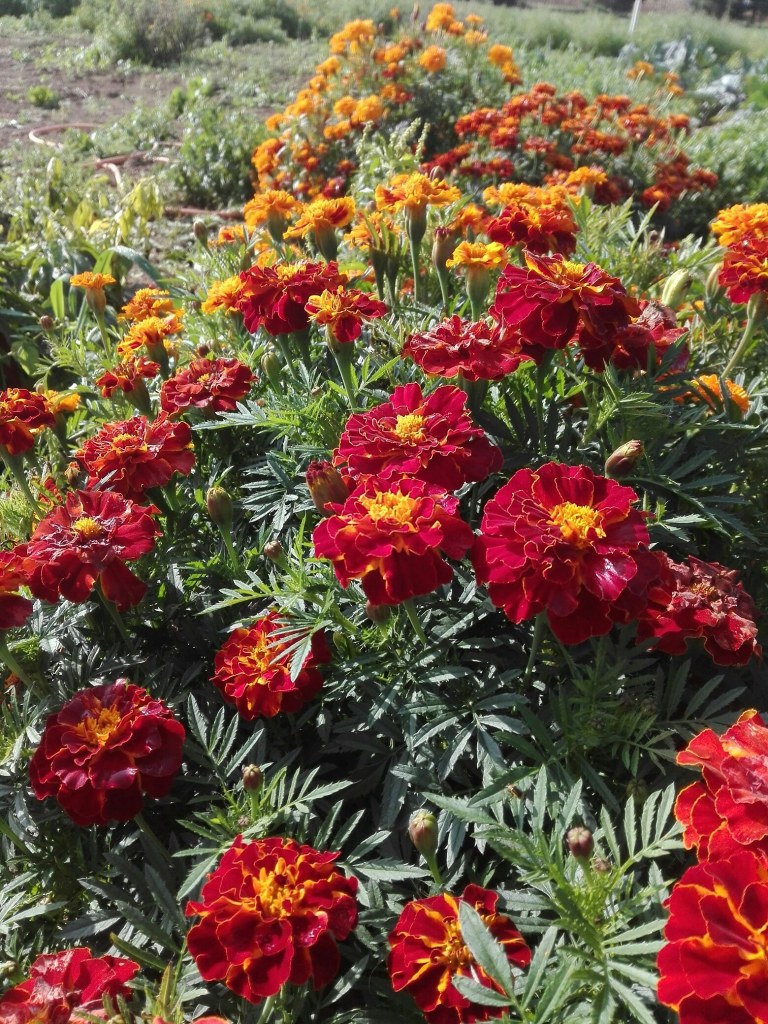
One of the most well-known companions in the garden is marigold.
We use it to attract pollinators and repel nematodes — and to be honest, it’s a joy to look at when its vivid blossoms burst open. But don’t pull it out of the ground once it finishes flowering!Just cut the stem at the base — leave the roots in the soil to feed the ecosystem.
Another favorite is borage, beloved by bees and bumblebees. It blooms early and continues flowering all the way until the frost. By planting just one or two at the end of each garden bed, you’ll bring pollinators close to your vegetables — and improve your yields naturally.
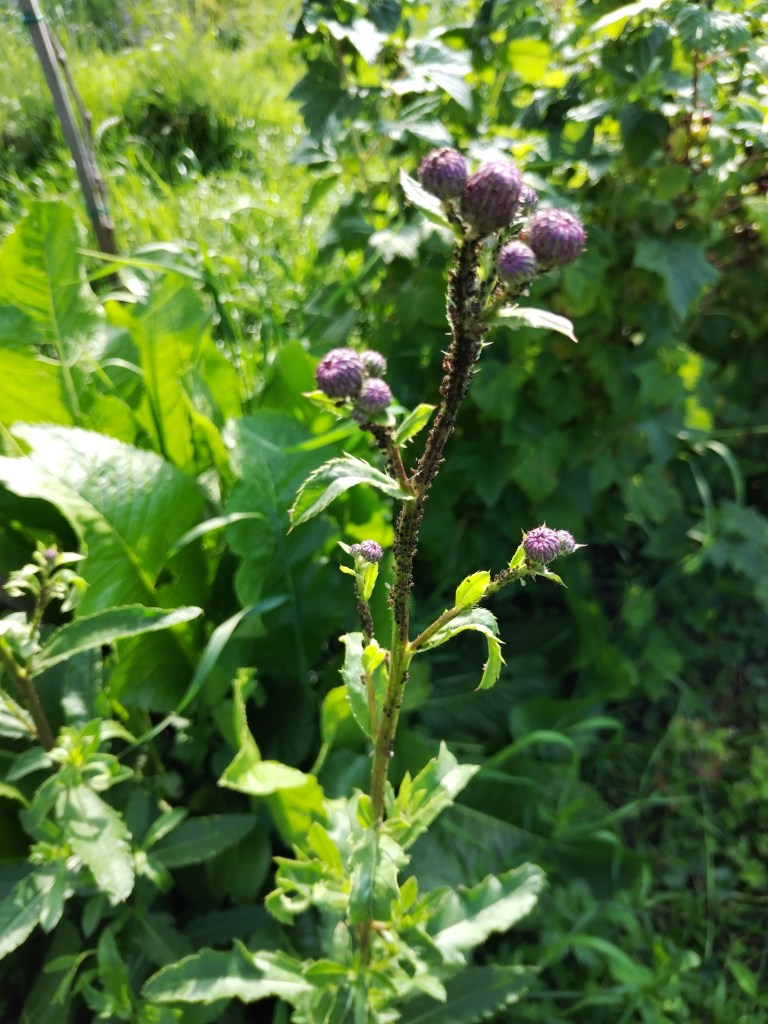
Aphids are a common problem for many gardeners, but even when they suddenly multiply, there’s no need to reach for chemical solutions. Elderberry tends to attract the early wave of aphids — especially the black aphid, which seems to love it. Nasturtium is another great ally. It’s easy to sow in garden beds, and its tender leaves often become an irresistible magnet for aphids.
Flowering plants, in general, are more than just beautiful — they attract beneficial insects like lacewings and hoverflies, whose larvae love to feast on aphids. So by encouraging blooms in your kitchen garden, you’re not just creating a pretty view — you’re building your own living pest control system.

Companion planting carrots and onions is a long-standing tradition — their strong scents confuse pests like the carrot fly. Instead of aiming to eliminate pests completely, try to mislead and divert them. When you avoid planting large, uniform patches and straight rows, pests have a harder time locating their target crops. The stronger the scent of a plant, the more it helps mask the presence of more vulnerable neighbors.
Rosemary, lavender, lemon balm, and basil all have powerful aromas that can hide the scent of tender leafy greens growing nearby.
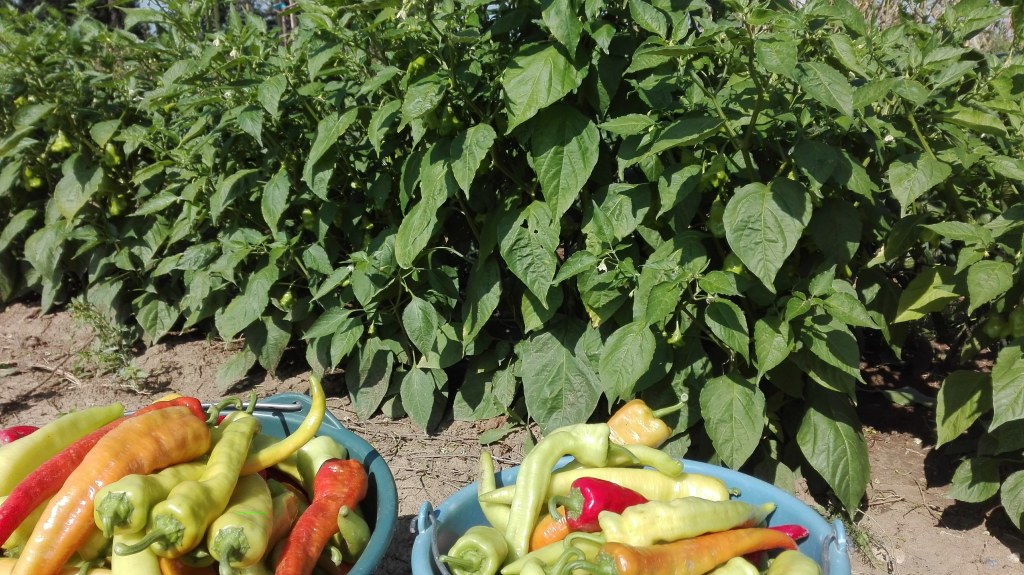
Your own kitchen garden doesn’t just give you fresh vegetables and fruits — it gives you freedom.
Plan wisely now, and you could fill your pantry later — without having to rely on supermarket prices.
Start sowing, watch your plants grow, and enjoy every moment of gardening!
How do you prepare for the winter months?
Do you have a tried-and-true recipe, preserving trick, or seasonal routine you swear by?
Share your experience in the comments — it might be just the inspiration someone else needs to start a new habit.
If you find this helpful, feel free to share the post, and leave a comment!
I am happy to answer all questions related to gardening!
 Green to Green
Leave a comment